Explore New Ideas
Discover Proven Impact
Explore thought leadership, case studies, success stories, and expert insights focused on experiential learning, career-connected education, student engagement, and economic mobility. Whether you're looking for inspiration, evidence, or practical ideas, you'll find resources designed to help prepare students for what's next.
Recent Insights & Impact
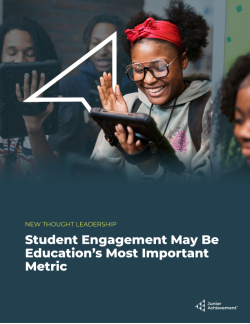
For decades, academic success has largely been measured through standardized testing, GPA, and graduation rates. While these benchmarks remain important indicators of educational progress, they no longer tell the full story of whether students are prepared to succeed in a rapidly changing world. Today’s students are entering a future shaped by technological advancement, evolving workforce demands, and increasing economic uncertainty. In response, leaders in the education space are beginning to ask a broader question: Are students truly engaged in their learning?
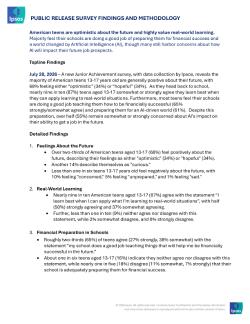
Research by Ipsos and Junior Achievement shows that teens are optimistic about their futures, despite concerns about how AI might impact their career prospects. Read the summary here.
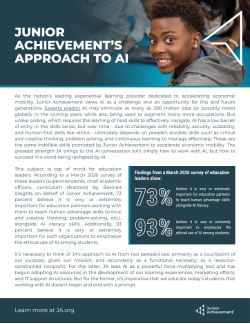
AI is expected to change the world of work. Learn how Junior Achievement is preparing students to succeed in our rapidly changing economy.
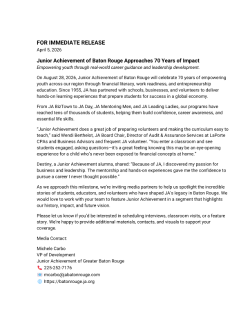
Junior Achievement of Baton Rouge Approaches 70 Years of Impact Empowering youth through real-world career guidance and leadership development.
Research by Junior Achievement and Basinait Insights conducted in March of 2026 shows that more than 90 percent of education leaders surveyed agree with the statement, “There is a disconnect between what is taught in primary and secondary schools and what it takes for students to succeed economically in the future.” This response potentially reflects a recognition that while schools can provide strong academic foundations, too many students are graduating without the skills, experience, and practical exposure needed to translate learning into long-term economic opportunity.
Through its strategic initiative, Education for What’s Next, Junior Achievement emphasizes the importance of equipping Generation Z and Generation Alpha with the durable skills and relevant and enduring experiential learning necessary to navigate an uncertain future of work. When young people develop financial capability, explore career pathways, and cultivate entrepreneurial thinking, they enter the workforce better prepared to navigate challenges, pursue advancement, and create opportunities.
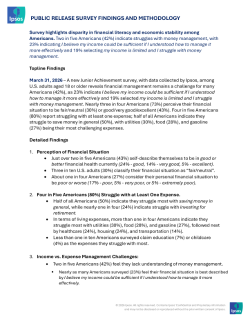
These topline results from a survey by Junior Achievement and global research firm Ipsos explore the connection between financial literacy, money management, and economic outcomes.
For generations, economic mobility (the idea that each generation can achieve greater financial stability and opportunity than the last) have defined the American promise. Today, that promise is under measurable strain. A child’s ZIP code, family income, and access to opportunity remain powerful predictors of future outcomes. Talent is universal; opportunity is not.
“What’s Next?” That’s the question everyone is asking as AI is beginning to change the future of work. Junior Achievement is committed to answering that question through career-connected learning and our proven experiential learning offerings. This case statement defines the challenges, and JA’s approach to addressing them.
Failure can be one of the most effective tools for learning. However, this approach doesn’t always align easily with the realities of the classroom. Using Experiential Learning, Junior Achievement provides students with a structured learning environment where failure can be a positive force for learning and even help foster a growth mindset in students. Read more in JA’s latest thought leadership piece.
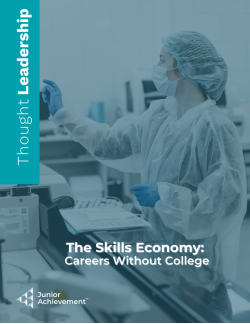
Is a four-year degree necessary? For some fields, no. But the rising skills economy also depends on job candidates with measurable competencies to fill vacancies. This thought leadership piece explores the changing employment landscape and how Junior Achievement is preparing young people to succeed in it.
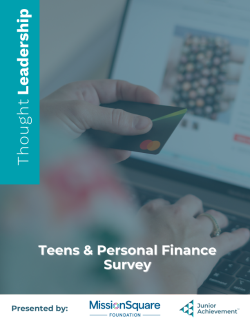
This survey by Junior Achievement and MissionSquare Retirement’s Foundation explores how many teens are being exposed to financial literacy education and the impact it is having on their perceptions when it comes to money management and financial concepts.
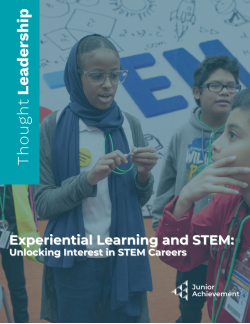
A survey of teens showed that only 10 percent of teen girls would want a job in a non-medical STEM profession after they graduate. The same survey also shows boys’ interest in STEM careers has declined in recent years. Read our thought leadership piece on how Junior Achievement uses experiential learning and STEM professionals as role models to create a more engaging environment for students.
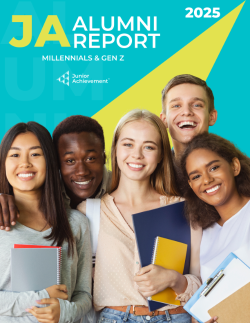
This research by Ipsos delves into Gen Z and Millennial JA Alumni’s perspectives on the impact their Junior Achievement experience had on their lives, ranging from career decisions to financial capability.
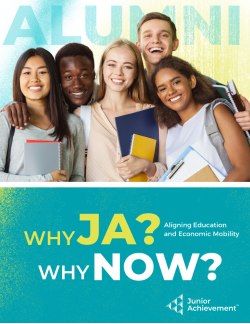
What can be done to better align how we educate young people with an ever-changing future? Why JA? Why Now? helps answer that question by illustrating challenges facing today’s young people and the steps that can be taken, with education and Junior Achievement working in tandem, to help them overcome and achieve their potential as adults.
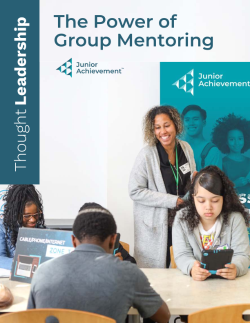
When you say the word “mentor,” people often think of one-to-one mentoring. However, group mentoring can have similar benefits and even some added advantages. Learn more about group mentoring and Junior Achievement’s approach to this life-changing way of empowering youth.
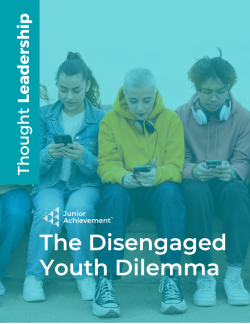
In the United States, one in eight young adults is disconnected from employment, education, and training. At the same time, 40 to 60 percent of high school students say they are disengaged at school. What is behind the disengaged youth dilemma, and how is Junior Achievement working to address it? Learn more in this thought leadership piece.

How prepared do teens feel for their future careers? What role does education play? And what about AI? Learn more from this thought leadership piece.
When you ask most adults “the one thing” they wish they learned in school but didn’t, the response typically involves money management and personal finance. This thought leadership piece explores what is and isn’t working with financial literacy education and Junior Achievement’s approach to promoting financial literacy and, more importantly, financial capability.

Gen Z: Not Quite Ready for Primetime Junior Achievement recently conducted research with HRO Today to learn more about employer perspectives on Generation Z and what can be done to better prepare young adults for success in the workplace. Read the findings here.

With rising prices and mortgage rates, homeownership is out of reach for many Americans. This thought leadership explores the factors behind this phenomenon and how to better prepare today's young people to be the homeowners of tomorrow.

In recent years, the value of a college education has been called into question. But if college isn't for everybody, what alternatives are there to ensure they have the skills they need to achieve their goals in life?
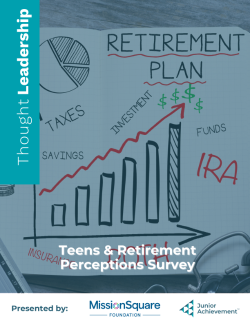
Retirement is more top-of-mind for teens than many might think, but how much do they understand what goes into planning for their financial futures? This research explores these issues and more.
Family financial stresses are having an impact on teens. Learn more about teens top concerns and possible ways to address them through financial literacy education.
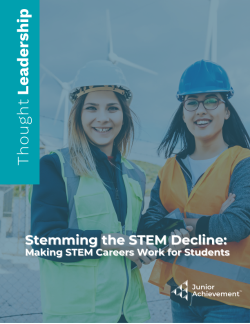
In recent decades, a great amount of effort has been put into educating young people about STEM careers and the need for STEM skills. Despite this, teen interest has continued to remain flat and even decline. This thought leadership piece explores some of the factors contributing to this phenomenon and possible ways to address it.

With rising prices and a changing work landscape, Generation Z is facing challenges not experienced by previous generations. Are they falling behind economically? What can be done about it? This thought leadership piece explores the challenges and possible solutions.

To gain a better understanding of how Generation Z perceives volunteering in and out of a place of employment, Junior Achievement enlisted the help of research firm Ipsos to conduct a multi-generational survey on volunteering. These are the results of an Ipsos poll conducted on behalf of Junior Achievement.
Many employers are struggling to re-establish workplace culture following the disruptions of the pandemic. Employee Volunteer Programs, EVPs, like those supported by Junior Achievement are one way to address this challenge. This thought leadership piece covers the topic and shows JA as a solution provider.

JA is using technology to help high school students have a better understanding of how money works, as demonstrated by this overview of the JA Finance Park Virtual Advanced Simulation.
This summary shows how the JA Finance Park Virtual Entry Simulation helps improve the financial capability of middle school students.
Recent advances in Artificial Intelligence "AI" are prompting questions about this technology's future impact on jobs. This JA thought leadership paper highlights teens concerns about their future career prospects and possible ways to better prepare today's young people for tomorrow.
The nation is facing economic uncertainty not seen in decades. How will this impact today's young people, and what can be done to better prepare them to achieve their potential given the seismic forces affecting our society and the world?
Junior Achievement alumni credit JA for positive outcomes when it comes to managing money, pursuing a career, and starting a business. This, according to new research by Ipsos. Read the executive summary here.
How do today's young people feel about owning a home? What questions and concerns do they have? How can these questions and concerns be addressed? The 2022 Junior Achievement and Fannie Mae Youth Homeownership Survey explores these and other issues.
Inflation is back and kids have questions. This guide helps parents, and others with young people in their lives, explain the causes of inflation and what can be done to address it in ways that are easy for young people to understand.
Research by The Allstate Foundation and Junior Achievement shows that teens may be experiencing early signs of financial abuse in their romantic relationships. This executive summary not only covers the challenges facing teens, but steps they can take to recognize financial abuse and address it through education.
Economic Empowerment for a More Equitable and Just Tomorrow- Junior Achievement is committed to promoting a more equitable and just tomorrow for today's young people. This thought leadership piece explores the economic challenges facing Black and Latinx Americans and the role Junior Achievement can play in promoting economic mobility through education in light of these challenges.
Ipsos, the world's third largest market research firm, has conducted this survey of Junior Achievement alumni in the United States. JA Alumni report the impact of Junior Achievement on their lives, including decisions related to education, career, and starting a business.
The goals of this poll included better understanding teens' interests in career paths, the attraction from influencers towards specific industries, and accessibility to work-readiness and financial-preparedness courses.
How many states offer or even require entrepreneurship education programs? This report provides an informative overview.
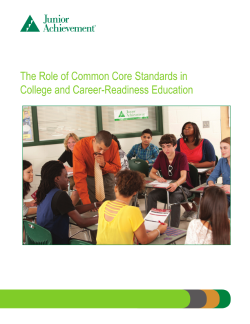
America's schools face unprecedented challenges to prepare students for postsecondary education and entry into the U.S. and global workforce. Discover how programs developed by JA USA directly support the goals of the Common Core State Standards Initiative at elementary, middle, and high school levels to ensure students are college and career ready.

Business leaders claim that the generation of students entering the workplace lacks many critical "soft" skills like problem solving and critical thinking, abilities that contribute to an individual's and an organization's success. Explore Junior Achievement's new proposed model that links a foundation of recognized knowledge, skills and attitudes to measurable engagement and achievement activities. The application of this model can potentially lead to a student who is credentialed to be "workforce ready," fully prepared to contribute meaningfully upon entering a 21st century global workplace.
The number of states offering entrepreneurship education programs more than doubled between 2009 to 2015. See if your state is one of them.
Junior Achievement's 2016 Teens and Personal Finance Survey, sponsored by the Voya Foundation, shows that teens believe borrowers, not the government, are responsible for paying off their student loans.
Everyone agrees that STEM plays an important role in the job market of today and tomorrow. But what do teens think of STEM, and other career fields, and how does that perspective differ by gender? The 2017 Teens & Careers Survey by Junior Achievement and EY explores those issues, and more.
In its first survey of elementary-aged children and their parents, Junior Achievement discovers how well kids understand money while learning when parents think children should start learning about financial concepts. This research is presented in conjunction with the Jackson Charitable Foundation.
Employee Volunteer Programs EVPs are an essential part of many Corporate Responsibility initiatives. But how can CR professionals ensure that their EVP efforts are meeting the needs of employees while advancing the goals of the company? This research by Junior Achievement and the Corporate Responsibility Association addresses these and other questions.
This survey of teens finds that only half of them plan to seek financial independence from their parents as adults! This, and other important insights, are available in this JA Teens and Personal Finance executive summary.
Today's 18-year-olds could start contributing to a 401K or Roth IRA with their first job, but many won't. This survey explores teens' knowledge and attitudes when it comes to saving for retirement.
Teens may think they are ready for college, but are they prepared to pay for higher education? This JA Teens and College Savings survey explores how ready today's young people are to make one of the biggest investments of their lifetime.
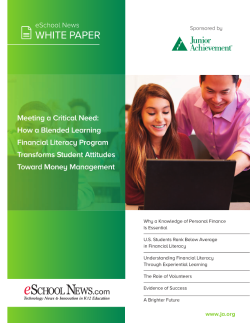
Technology in the classroom is changing the way students learn and teachers teach. This white paper, done in conjunction with eSchoolNews, explores how blended learning is impacting young people's attitudes and behavior related to money management.
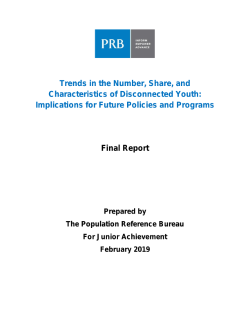
"Disconnected Youth" are defined as those between the ages of 16 and 24 who are not employed nor enrolled in school. This research, conducted by the Population Reference Bureau for Junior Achievement USA, explores how those characteristics have changed since 1970 and touches upon implications for future policies and programs.

What do you want to be when you grow up? It's an question we have all been asked, but selecting a career is a decision many teens and young adults tend to put off, as discovered in this research.